Sports Marketing
The Missing Pillar: Why Ghana’s New Economy Cannot Afford to Ignore Sports
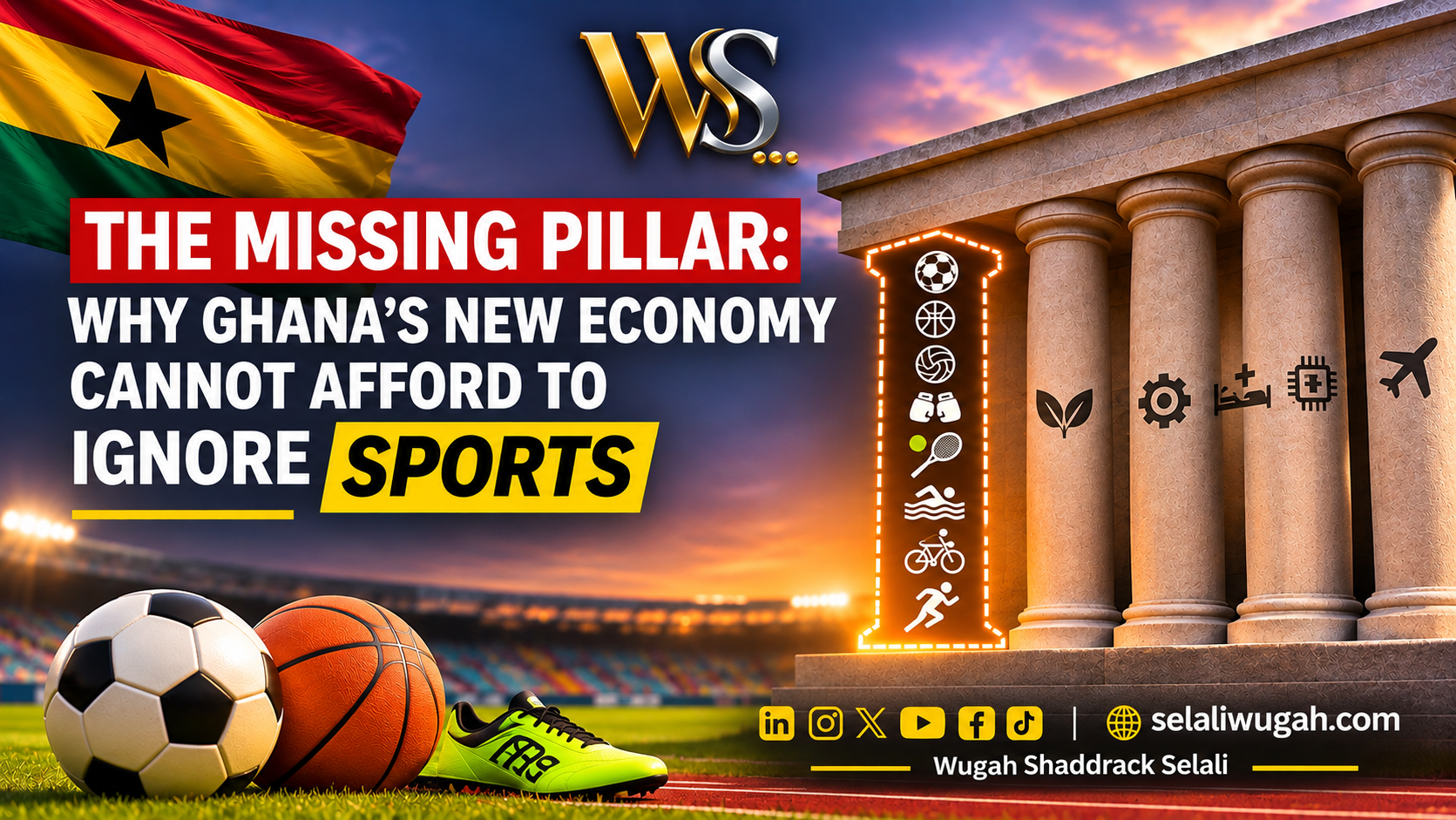
When Finance Minister Dr Cassiel Ato Forson presented Ghana's 2027 Budget Statement on November 12, 2026, he outlined an ambitious US$10 billion New Economy Programme, built around eight interconnected pillars intended to transform the country's economic structure between 2027 and 2030. The vision is to move Ghana towards a more productive, industrialised economy driven by local production, investment, innovation and job creation.
It is an ambitious direction, and many of the priorities deserve recognition. From commercial agriculture and energy infrastructure to technology, tourism, pharmaceuticals and manufacturing, the government has identified sectors with considerable potential to drive economic transformation.
However, one industry appears to have been left outside this strategic framework: sports.
The concern is not that sports received no attention in the budget. The government allocated GH¢782 million to the Ministry of Sports and Recreation, including GH¢600 million for the construction of ten regional multipurpose stadia. This is a welcome investment in sporting infrastructure. However, sports was not identified as one of the eight pillars of the New Economy Programme. And that raises a bigger question: are we looking at sports merely as entertainment and recreation, rather than recognising it as an industry capable of contributing meaningfully to Ghana's economic development?
Sports is much bigger than the athletes we watch on television or the national teams we celebrate during international competitions. It is an economic ecosystem involving broadcasting, sponsorship, advertising, tourism, hospitality, merchandising, manufacturing, technology, event management, sports medicine and professional services. Behind every sporting event are businesses, employees, suppliers and service providers. A football match, for instance, creates opportunities for transport operators, hotels, restaurants, security companies, media organisations, photographers, advertisers and merchandise vendors. The economic activity extends well beyond the final whistle.
International examples demonstrate the scale of this opportunity. In the United Kingdom, the wider sports sector directly contributed approximately £63.2 billion to the economy in 2024 and supported around 1.3 million jobs. The English Premier League alone generated an estimated £9.8 billion in gross value added during the 2023/24 season, supported more than 100,000 full-time-equivalent jobs and contributed £4.4 billion in taxes. These figures illustrate that professional sports can become a significant contributor to national productivity, employment and government revenue.
Spain offers another interesting example. Its sports sector supported approximately 270,200 jobs in 2025, while more than 46,000 businesses were operating in sport-related activities. In 2024, international tourists whose primary reason for travelling to Spain was sport generated more than €1.77 billion in expenditure. Sports, therefore, is not just a domestic entertainment activity. It can become an important component of a country's tourism and foreign exchange strategy.
Saudi Arabia has taken the argument even further. Through its Vision 2030 programme, the country has deliberately positioned sports as part of its economic diversification agenda. Its strategy goes beyond attracting international football stars. It includes sports-club privatisation, private-sector investment, infrastructure development, local talent development, increased community participation and the hosting of international competitions.
The results offer useful evidence of what a coordinated strategy can achieve. According to Saudi Arabia's Ministry of Sport, 80 international sporting events attracted approximately 2.5 million tourists over four years. At the Jeddah Formula 1 Grand Prix, visitors from 160 nationalities attended, while the event was reported to have generated an economic impact of SAR900 million and supported approximately 20,000 jobs. These figures were reported by the Minister of Sport at the November 2024 Budget Forum. The Kingdom has also pursued private-sector participation through its sports-club privatisation programme, with 14 clubs offered for privatisation and interest expressed by 25 companies at the time of the announcement.
What makes the Saudi example particularly relevant is the deliberate connection between sports, tourism, investment, employment and commercial development. Ghana does not need to replicate Saudi Arabia's spending model or ambition at the same scale. Our economic circumstances are different. However, we should learn from the strategic thinking behind its approach: sports can be organised, financed and developed as an economic sector, with measurable outcomes and private-sector participation.
What makes this opportunity particularly relevant to Ghana is how naturally sports connects with several of the government's existing economic pillars. The tourism, culture and creative arts agenda could benefit from international competitions, sporting festivals, marathons, cycling events, beach sports and training camps. Our coastline, climate, hospitality industry and position within West Africa provide opportunities to develop sports tourism. Yet, how much deliberate attention are we giving to attracting international sporting events and positioning Ghana as a destination for them?
There is also an opportunity within the cotton, textiles and garments pillar. Ghana imports a considerable range of sporting apparel and equipment. A deliberate effort to support local manufacturers to produce jerseys, tracksuits, footwear, training equipment and other sporting products could create demand for locally manufactured goods. Schools, clubs, associations and national teams represent a potential domestic market, while the wider West African region offers opportunities for expansion.
The technology economy also has a place in sports. Broadcasting, digital content, performance analytics, ticketing systems, athlete management platforms and sports data are creating new commercial opportunities globally. Ghana's growing digital population presents an opportunity for local entrepreneurs, media companies, software developers and content creators to participate in this emerging market.
Beyond these commercial opportunities, sports can support employment and professional development. We often discuss youth unemployment without fully examining the industries capable of creating jobs for young people. The sports industry requires marketers, administrators, coaches, referees, physiotherapists, sports scientists, event managers, journalists, lawyers, photographers, broadcasters and commercial managers. Not every young person who loves sports has to become a professional athlete to earn a living from it.
But what does the Ghanaian evidence tell us?
Ghana does not yet have a comprehensive and regularly updated measurement of the entire sports economy. The Ministry of Sports and Recreation's 2026–2029 Medium-Term Development Plan cites an estimated contribution of approximately 1.4% of GDP from sports, referencing earlier national research. However, this figure requires careful interpretation. A 2017 discussion involving the Ghana Statistical Service produced the 1.4% estimate, but the methodology was subsequently questioned by the Ministry of Youth and Sports. More recently, Ghana's Minister of Sports and Recreation, Kofi Adams, has cited a figure of less than 0.5% when discussing the contribution of sports to GDP across most African countries. That continental figure should not, however, be presented as a verified Ghana-specific estimate.
The difference between these figures reinforces a more fundamental problem: Ghana does not have a sufficiently established and consistently applied framework for measuring the full economic contribution of sports. Indeed, the National Sports Authority had previously initiated research into sports' contribution to GDP in collaboration with the University of Ghana and the University of the Western Cape. The 2024 Budget Estimates indicated that the initial research framework had been completed and was awaiting consideration by an external consultant. This uncertainty should strengthen our case for a national sports satellite account and a credible, independently verifiable measurement of the industry's contribution.
The same Ministry's 2026–2029 Medium-Term Development Plan provides further evidence of the sector's commercial weaknesses. Drawing on National Sports Authority figures from 2022, the document reports that major national sporting venues, including the Accra Sports Stadium and Baba Yara Stadium, were operating at less than 40% of their revenue-generating potential. It further reports that stadium rental revenue was below GH¢5 million in 2022, against estimated potential revenue of GH¢15–20 million if the facilities were fully optimised through improved commercial management.
The document also cites Ghana Independent Broadcasters Association figures from 2022, indicating that domestic broadcasting rights for sports other than football accounted for less than 5% of total sports media expenditure, while football broadcasting rights alone were valued at more than US$7 million annually. These figures are historical estimates reported in the Ministry's planning document, rather than current audited industry-wide revenue figures. Nevertheless, they illustrate the commercial opportunities Ghana is yet to fully develop.
These figures reveal something important. Ghana's challenge is not simply a lack of sporting talent or infrastructure. It is also a challenge of commercialisation, management, investment and the ability to convert sporting activity into measurable economic value.
We must also make an important distinction between government expenditure on sports and the economic contribution of the sports industry. The GH¢782 million allocated to the Ministry of Sports and Recreation is public expenditure. It does not represent the total value of sports to the Ghanaian economy. The wider economic contribution includes the activities of private businesses, clubs, event organisers, broadcasters, manufacturers, sponsors, tourism operators and thousands of individuals working across the sector.
This is precisely why Ghana needs a national sports satellite account, similar to the model used in the United Kingdom. It would help measure the industry's direct and indirect contribution to GDP, employment, investment, exports and government revenue. Without reliable data, sports will continue to be discussed largely through stadiums, competitions and national team performances, while its wider economic opportunities remain difficult to identify and measure.
The proposed ten regional stadia should also be approached as economic assets, not simply construction projects. Each facility needs a sustainable management and commercial model. Beyond football, these venues should accommodate athletics, volleyball, basketball, boxing, entertainment events and other activities where feasible. They should attract sponsors, generate revenue, support local businesses and create employment. Building infrastructure is important, but ensuring that it remains productive is even more important.
Ghana must also become more deliberate about attracting private-sector investment. Government cannot carry the financial responsibility for developing the entire sports industry. One practical approach would be to establish a framework that encourages public-private partnerships for stadium development and management. Private operators could participate in venue management, commercial leasing, hospitality, ticketing, advertising and event promotion under transparent agreements.
There is also room to explore sports investment funds that bring together institutional investors, businesses and development partners to finance commercially viable sporting projects. Such funds could support sports academies, professional clubs, event infrastructure, sports technology and local equipment manufacturing. The government could further examine targeted sponsorship tax incentives, subject to appropriate fiscal safeguards, to encourage businesses to invest in recognised sporting activities and youth development programmes.
Domestic competitions must also become more commercially attractive. Clubs and federations need stronger governance, financial management, marketing and communication systems. Sponsors require more than a logo on a jersey. They need visibility, audience data, content rights, fan engagement, hospitality opportunities and measurable returns. A professionally managed league with credible broadcasting, consistent scheduling, proper administration and strong audience engagement is more likely to attract sustained private investment.
Perhaps the most important point is that this conversation should not revolve around football alone. Ghana has sporting potential in athletics, boxing, volleyball, basketball, hockey, swimming, cycling and several other disciplines. Each has opportunities for talent development, commercial partnerships, competitions and professional careers. A national sports economy strategy must create room for all these disciplines to grow.
I welcome the government's commitment to sporting infrastructure and the allocation made to the Ministry of Sports and Recreation. However, I believe the bigger conversation remains unfinished. If the New Economy Programme is intended to identify sectors capable of creating jobs, attracting investment, stimulating local production and generating prosperity, sports deserves serious consideration.
We cannot continue to discuss tourism without examining sports tourism, manufacturing without considering sporting goods, technology without exploring sports innovation, and youth employment without recognising the professional opportunities within the sports ecosystem.
Ghana does not lack sporting talent, passion or potential. What we need is a stronger economic and commercial framework that allows the industry surrounding that talent to create sustainable value.
The omission of sports from the eight pillars should not simply become another political talking point. It should stimulate a national conversation involving policymakers, investors, sports administrators, businesses, researchers and professionals.
The new economy should be about every productive sector capable of contributing to national development. Sports is one of them. It is time we started treating it as such.
Wugah Shaddrack Selali is a marketing and brand strategist with interests in sports marketing, commercial development and the business of sport.