
Travel & Culture
ADIDOME: A LAND AMONG THE BAOBAB TREES, A HERITAGE WE ARE LOSING
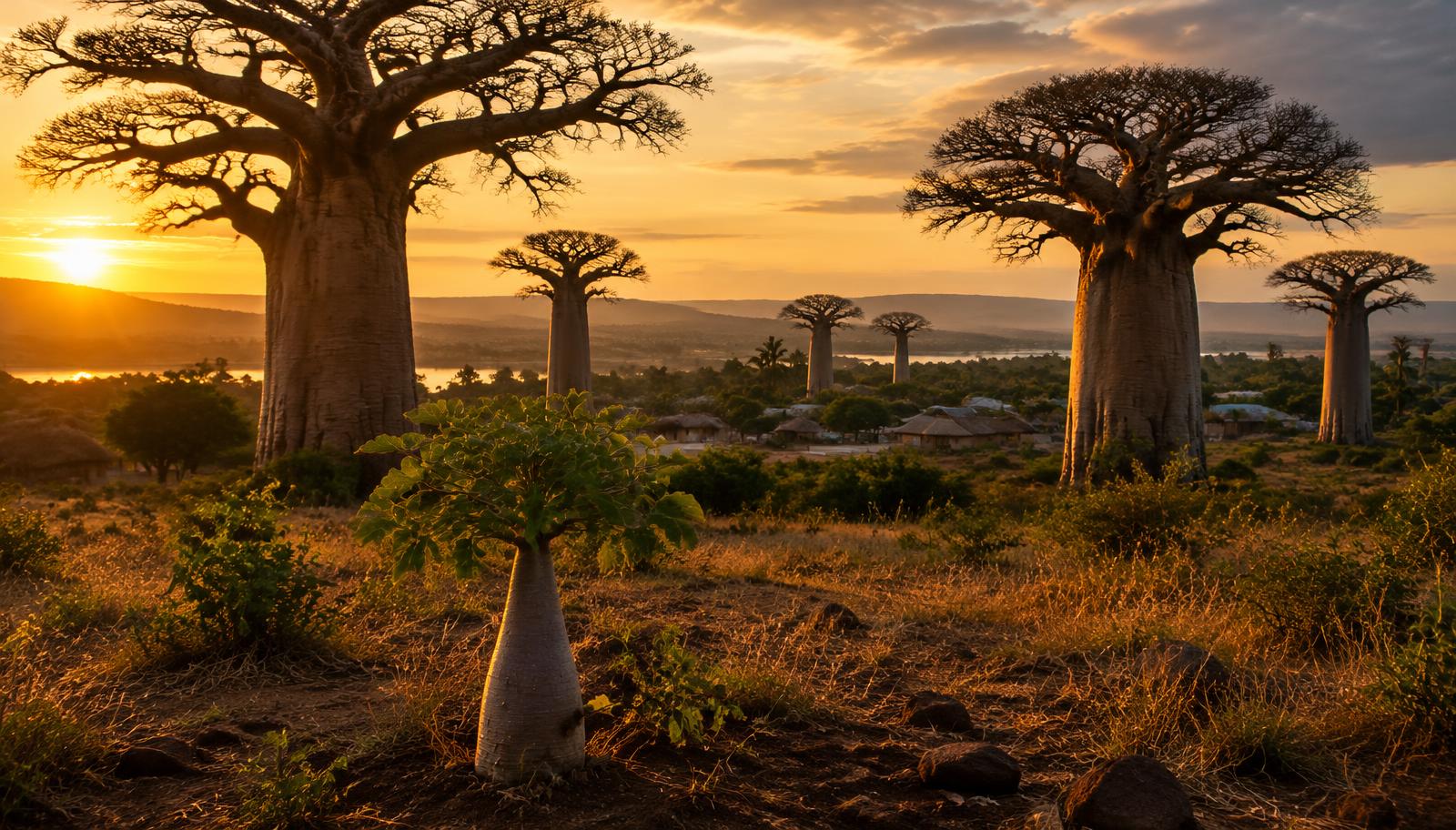
What happens when a town gradually loses the very trees that gave it its name?
Adidome, in the Volta Region of Ghana, carries a beautiful story in its name. The Ewe expression Adidowodome means “among the baobab trees.” It speaks of a time when these remarkable trees were a defining feature of the land, shaping its identity and connecting generations to their natural environment.
Today, however, that story is becoming increasingly difficult to see. The baobab trees that once characterised Adidome are being cut down, and the town is gradually losing a part of its natural heritage. There are hardly any left in some parts of the town. It is a painful irony that a place named after the baobab could one day struggle to show visitors the trees that inspired its name.
But why should we care so much about a tree?
The adido, as the baobab is known locally, is more than a feature of the landscape. It is a source of food, traditional knowledge, livelihood and cultural identity. Across generations, communities have found ways to benefit from its different parts.
Its fruit is one of nature's gifts. With its distinctive sweet and tangy taste, the pulp can be enjoyed on its own or used to prepare refreshing drinks, sweets and even ice cream. It is a flavour that reminds us that some of our finest resources are already growing around us.
The seeds also have their place in traditional food preparation. They can be processed into a creamy, milk-like substance that many people find delicious. The leaves are used in local cooking, while other parts of the tree have traditional and practical uses. The baobab is a reminder of how much knowledge our communities possess about the resources around them.
Beyond its uses, the tree has ecological value. Baobabs provide habitat and food for wildlife, contribute to local biodiversity and form part of the natural landscape that makes African communities distinctive.
And yet, we are allowing these trees to disappear from a town whose very name celebrates them.
Adidome needs development. Every community does. But development should not require us to erase the features that give our communities their identity. We must ask ourselves what progress means if, in the process, we lose the very things that make our home special.
Imagine a future where Adidome deliberately protects its remaining baobabs, plants new ones, teaches schoolchildren the story behind the town's name and celebrates the tree through food, education, conservation and responsible tourism.
Imagine a child growing up in Adidome who can learn about the adido not only from an elder's story or a photograph, but by standing beneath one.
That future is still worth pursuing, but it requires action. The remaining trees need protection, and replanting must become part of a wider effort to restore this heritage. Community leaders, residents, traditional authorities, schools and local institutions all have a role to play.
As I share this video of the adido, I am reminded that heritage does not exist only in museums, monuments or history books. Sometimes, it stands quietly beside a road, bears fruit in its season and carries generations of memory in its roots.
Adidome is more than a name. It is a story written into the land.
If we allow the baobabs to disappear, we risk losing more than trees. We risk losing a visible connection to our history, a source of nourishment and knowledge, and a natural legacy we should be passing on to our children.
Let us protect what remains. Let us plant what has been lost. And let us ensure that future generations can experience the meaning of Adidome rather than merely hear about it.